

Remote Team Documentation Strategies
|
April 29, 2026
|

5 Steps for Documenting Employee Performance Issues Effectively
Key Highlights
- Set SMART goals to establish clear and actionable performance expectations.
- Communicate expectations clearly during onboarding and through regular cheque-ins.
- Conduct periodic reviews to discuss and adjust performance expectations as needed.
- Document expectations in a management system for easy reference during evaluations.
- Use specific examples when documenting performance issues to provide clear feedback.
- Avoid emotional language to keep performance discussions factual and constructive.
- Collect evidence such as attendance records and sales reports to support documentation.
- Review and update performance documentation regularly to keep it relevant.
- Schedule private meetings for discussing performance issues in a distraction-free environment.
- Prepare discussion points and bring relevant documentation to meetings.
- Encourage open dialogue and actively listen to employee concerns during discussions.
- Establish clear timelines for performance improvements with specific deadlines.
- Break down larger goals into smaller tasks to maintain focus and motivation.
- Communicate deadlines clearly and document performance issues in assessments.
- Monitor employee progress regularly and provide ongoing feedback.
- Document conversations about performance issues and request employee signatures for acknowledgment.
- Provide employees with copies of signed documents for their records and follow up on progress.
Introduction
You might be wondering how effective management really works, right? Well, it all hinges on tackling performance issues in a way that’s both transparent and constructive. Documenting employee performance problems isn’t just some bureaucratic checkbox; it’s a key strategy for building accountability and driving improvement within your team. But here’s the catch: many managers find it tricky to approach this sensitive task without pushing their staff away. So, what can you do to make sure that your documentation not only sets clear expectations but also gets employees excited about their own development? Let’s dive into that!
Define Clear Expectations for Performance
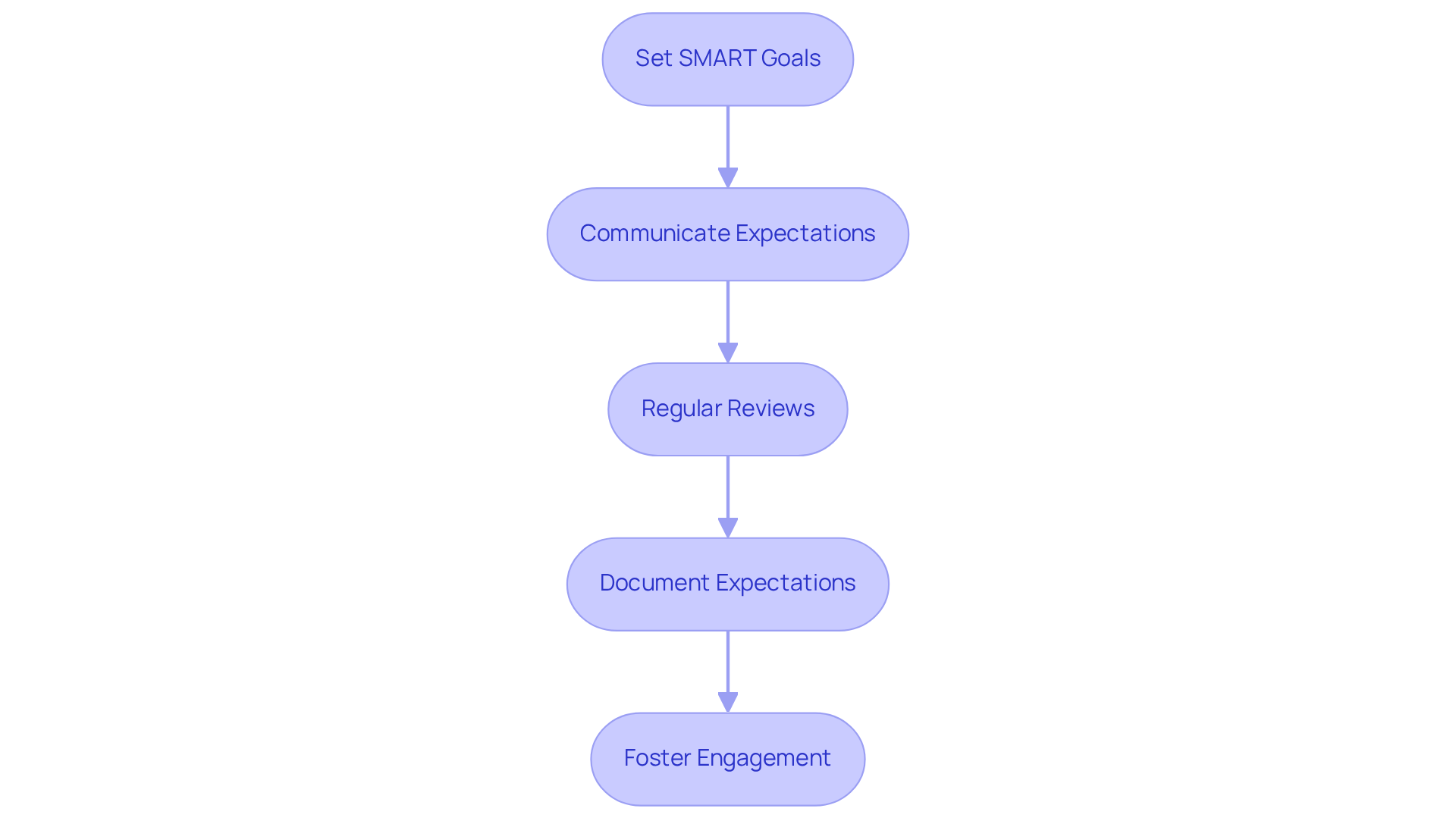
You might be wondering about the best ways of . Well, it all starts with setting ! Here’s how you can do that:
- Set : Think about it-how can you expect improvement without a clear target? Make sure your are Specific, Measurable, Achievable, Relevant, and Time-bound. Instead of saying, "improve sales," why not specify, "let’s increase sales by 15% in the next quarter"? That’s a goal everyone can rally around!
- : It’s super important to communicate these expectations clearly. Make sure to share them with your staff during onboarding and keep the conversation going with regular check-ins. And hey, don’t forget to focus on to reinforce those standards-people appreciate having something to refer back to!
- Regular Reviews: Now, let’s dive into the importance of scheduling . These chats are a great opportunity to discuss expectations and adjust them as needed based on changing business needs or employee development. It’s all about keeping the lines of communication open!
- Finally, in a employee performance issues. This way, they’re easily accessible and can be referenced during evaluations or conversations about any concerns. It’s like having a handy toolkit at your fingertips!
By following these steps, you’ll not only clarify expectations but also foster a more engaged and productive team. So, what do you think? Ready to tackle those documentation challenges?
Maintain Objectivity and Stick to the Facts
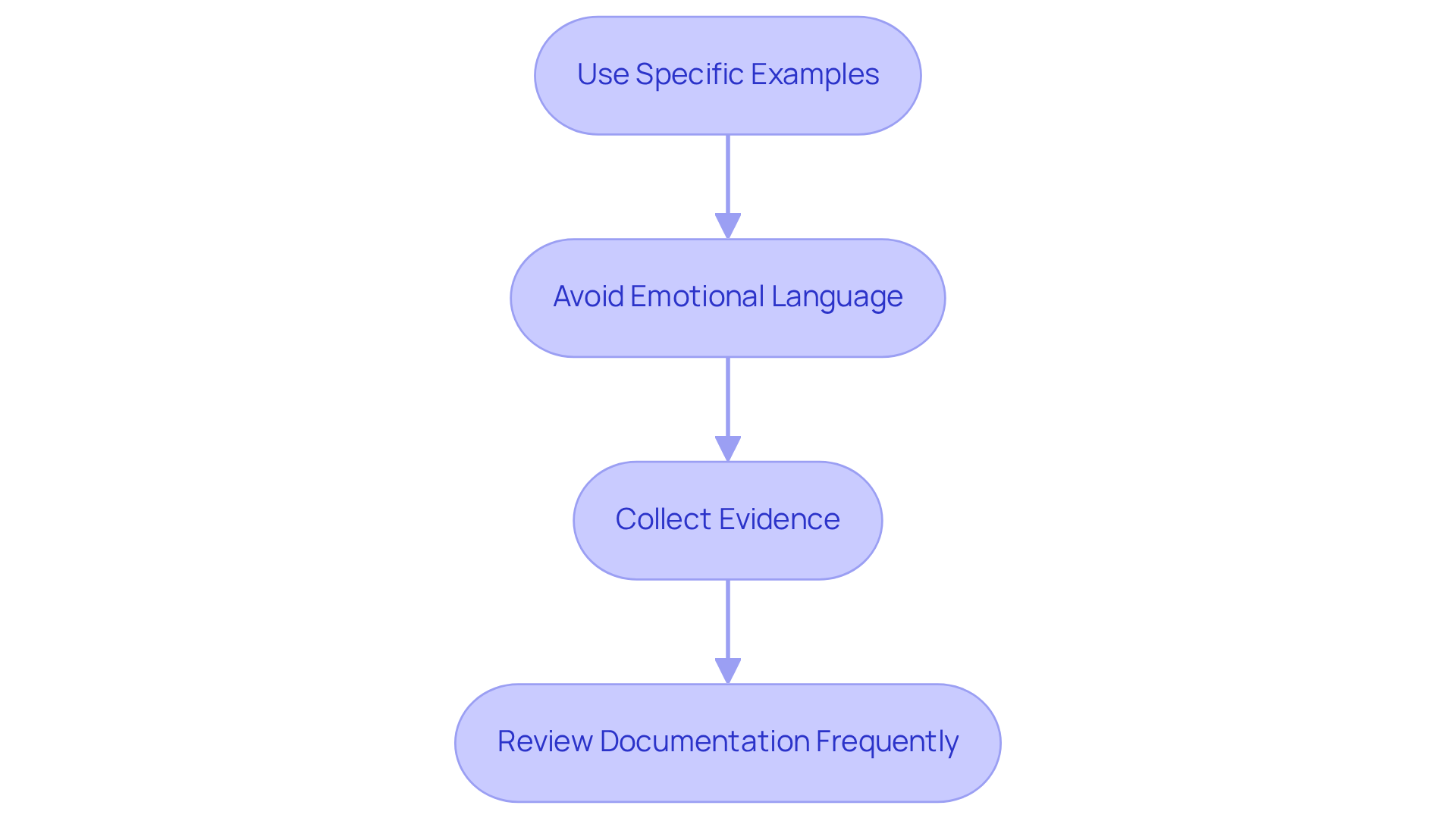
To keep things objective when documenting , let’s break it down into some easy steps:
- : You might be wondering why specifics matter. Well, instead of saying someone is 'often late', try saying they 'arrived late on three occasions in the last month'. This way, you’re giving clear, that employees appreciate. It really helps boost their engagement and effectiveness!
- : It’s important to stick to the facts. So, skip the judgmental terms like 'lazy' or 'unmotivated'. Keeping it factual helps create a more productive conversation and reduces the chances of staff getting defensive. Nobody likes feeling attacked, right?
- : Now, let’s talk about gathering proof. Collect data like sales reports, attendance records, or customer feedback to back up your notes. This evidence is crucial! Organizations that use data-driven assessments often see . Who wouldn’t want that?
- : Don’t forget to check in on your documentation regularly! ensures it reflects the latest data and stays relevant. Regular check-ins and updates have been shown to boost overall employee satisfaction and productivity, which includes . So, why not make it a habit?
Engage in Face-to-Face Discussions
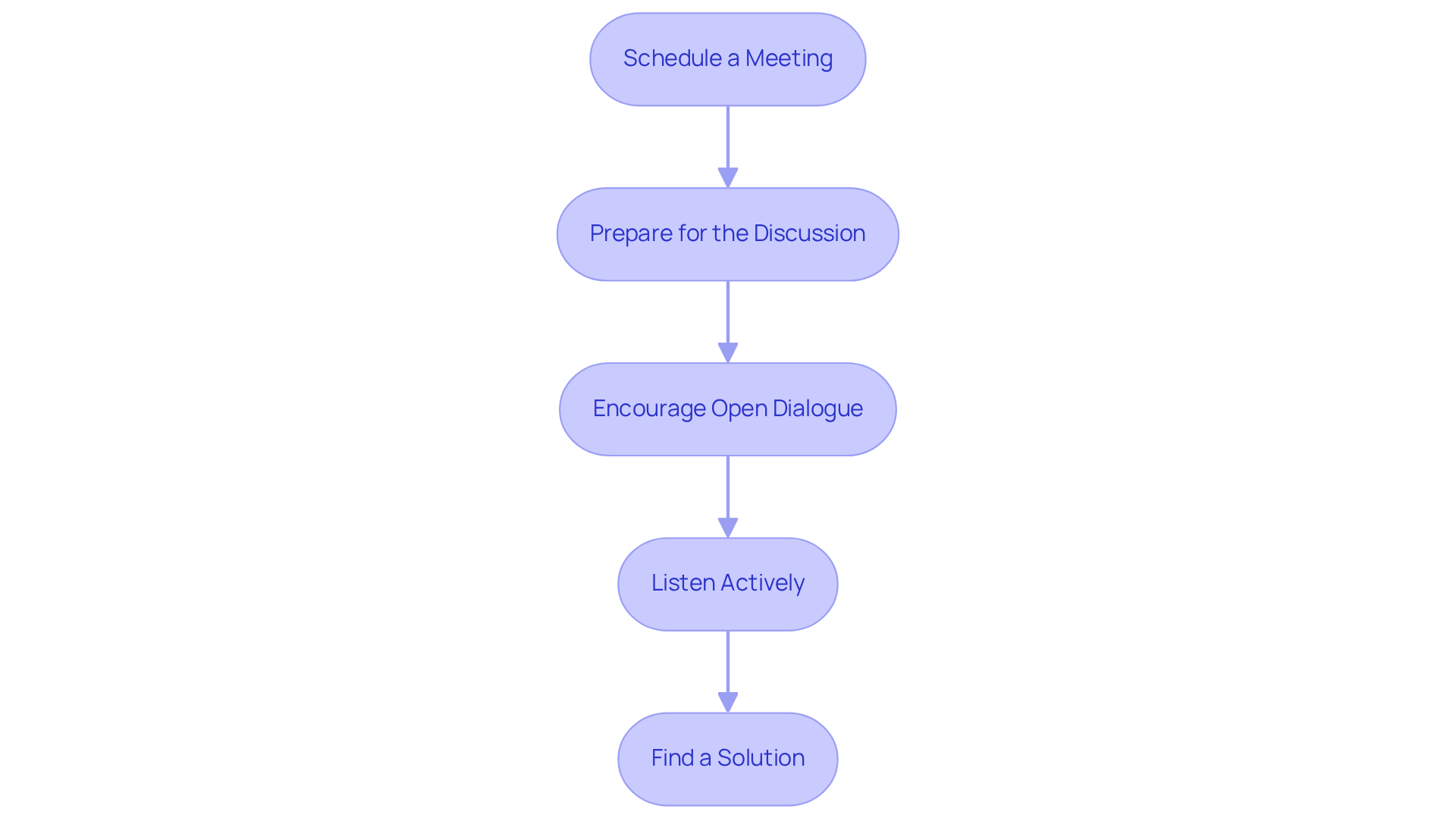
When it comes to tackling performance issues face-to-face, you might be wondering how to make those conversations more effective. Here are a few tips to help you out:
- : First things first, set up a private meeting to chat about any . You want to make sure the setting is comfy and distraction-free, right?
- : Before you sit down together, think about the specific points you want to cover. It’s a good idea to bring along any documentation that is useful for .
- Encourage : Create a space where everyone feels safe to share their thoughts and concerns. Try asking open-ended questions to get the conversation flowing.
- : Don’t forget to really listen to what the other person is saying. Show some empathy and acknowledge their feelings and perspectives. This can go a long way in finding a solution that works for both of you.
Set Deadlines for Improvement
To set , let’s dive into some friendly guidelines that can really help you out:
- Establish : You might be wondering how to get started. Well, defining is key! Think along the lines of, 'Let’s increase sales figures by 10% within the next two months.' Having not only gives you a sense of urgency but also provides direction.
- Break Down Goals: Now, let’s talk about those big goals. Instead of feeling overwhelmed, why not ? Each task can have its own deadline. This approach keeps you focused and motivated. Did you know that people involved in goal-setting are 3.6 times more likely to feel motivated? That’s a pretty compelling reason to give it a shot!
- : Communication is crucial! Make sure your team fully understands the deadlines and what happens if they’re not met. in assessments or improvement plans can really reinforce accountability. As management specialists say, . Elizabeth Harrin puts it perfectly: 'Communicate more than you think you have to.'
- Monitor Progress: Speaking of communication, don’t forget to check in with your team regularly. Discuss their progress toward those deadlines. This ongoing dialogue allows for adjustments based on feedback and shows your commitment to their development. Plus, . In fact, 80% of staff would rather receive regular feedback than go through yearly evaluations. How’s that for motivation?

Obtain Employee Acknowledgment
To get in a way that really sticks, let’s break it down into some simple steps:
- After discussing effectiveness challenges and ways to enhance things, should include jotting down the conversation. Capture those and the actions you both agreed on. With SowFlow, you can easily create and update this material, keeping it relevant and at your fingertips.
- Request Signature: Now, ask the staff member to sign the documents. This confirms they understand the issues and the expectations laid out. You can do this on a or a summary of your discussion, all thanks to .
- Provide a Copy: Don’t forget to give the staff member a copy of the for their records. This not only reinforces the importance of the agreement but also serves as a handy reference for future chats. With SowFlow, sharing this guide is a breeze, making your workflow smoother.
- Follow Up: Finally, set up some follow-up meetings to check in on progress and make sure the . Utilize SowFlow's documentation features for , as well as to keep track of these meetings and any updates to the .
You might be wondering how all this helps. Well, , particularly in , not only clarifies expectations but also builds trust and accountability. So, let’s dive into how you can make this process even smoother!

Conclusion
You know, effective documentation of employee performance issues is super important for creating a productive work environment. When you set clear expectations, stay objective, have face-to-face chats, set deadlines, and get employee acknowledgment, you’re building a solid framework. This not only tackles performance challenges but also encourages growth and accountability among your team.
Throughout this article, we’ve highlighted some key strategies. You might be wondering about the importance of:
- Setting SMART goals
- Using specific examples
- Keeping communication open
These steps not only clarify what’s expected but also empower employees to take charge of their performance. Plus, regular reviews and constructive feedback keep performance documentation relevant and actionable, which ultimately boosts team engagement and productivity.
Now, in a workplace where effective communication and documentation are key, implementing these strategies can really foster a transparent and trusting culture. By prioritizing clear expectations and objective assessments, organizations can pave the way for better employee performance and satisfaction. Embracing these practices doesn’t just help individual employees; it strengthens the whole team, driving success for everyone involved.
Frequently Asked Questions
What are the steps to define clear expectations for employee performance?
To define clear expectations, set SMART goals (Specific, Measurable, Achievable, Relevant, Time-bound), communicate these expectations clearly during onboarding and through regular check-ins, schedule periodic reviews to discuss and adjust expectations, and keep a log of these expectations in a management system for easy reference.
Why is it important to set SMART goals for performance expectations?
Setting SMART goals provides clear targets for improvement, making it easier for employees to understand what is expected of them and how they can achieve those goals.
How should performance expectations be communicated to staff?
Performance expectations should be communicated clearly during onboarding and reinforced through regular check-ins to ensure that employees are aware of what is expected of them.
What is the purpose of regular reviews in performance management?
Regular reviews provide an opportunity to discuss expectations, adjust them based on changing business needs or employee development, and maintain open lines of communication.
How can one maintain objectivity when documenting performance issues?
To maintain objectivity, use specific examples, avoid emotional language, collect evidence to support the documentation, and review documentation frequently to ensure it is up-to-date and relevant.
Why is using specific examples important when documenting performance issues?
Using specific examples provides clear, actionable feedback, which helps employees understand the issues better and promotes engagement and effectiveness.
What types of evidence should be collected to document performance issues?
Evidence can include data such as sales reports, attendance records, or customer feedback to support the performance documentation.
How often should performance documentation be reviewed?
Performance documentation should be reviewed frequently to ensure it reflects the latest data and remains relevant, which can help boost employee satisfaction and productivity.
List of Sources
- Define Clear Expectations for Performance
- 60+ Goal Setting Statistics You Can't Ignore in 2026 (https://mooncamp.com/blog/goal-setting-statistics)
- 85 Must-Know Performance Management Statistics for HR in 2026 - SSR (https://selectsoftwarereviews.com/blog/performance-management-statistics)
- Performance Management Statistics: What 2025 Holds for HR Leaders (https://thrivesparrow.com/blog/performance-management-statistics)
- HR analytics: role clarity impacts performance (https://effectory.com/knowledge/hr-analytics-role-clarity-impacts-performance)
- 114 Powerful Quotes on Setting and Achieving Goals (https://goalsumo.com/articles/114-goal-setting-quotes)
- Maintain Objectivity and Stick to the Facts
- 23 Employee Performance Metrics To Track (https://aihr.com/blog/employee-performance-metrics)
- Essential Employee Performance Management Statistics in 2025 | Folks (https://folksrh.com/en/blog/performance-management-statistics)
- 85 Must-Know Performance Management Statistics for HR in 2026 - SSR (https://selectsoftwarereviews.com/blog/performance-management-statistics)
- Essential Performance Management Statistics HR Needs to Know (https://quantumworkplace.com/future-of-work/performance-management-statistics)
- peoplebox.ai (https://peoplebox.ai/blog/performance-management-statistics)
- Engage in Face-to-Face Discussions
- 101 Performance Management Quotes To Inspire Employees (https://blog.darwinbox.com/performance-management-quotes)
- 100 Surprising Meeting Statistics for 2026 (https://flowtrace.co/collaboration-blog/50-meeting-statistics)
- Essential Performance Management Statistics HR Needs to Know (https://quantumworkplace.com/future-of-work/performance-management-statistics)
- itdworld.com (https://itdworld.com/blog/leadership/performance-quotes)
- deliberatedirections.com (https://deliberatedirections.com/quotes-conflict-management)
- Set Deadlines for Improvement
- Essential Employee Performance Management Statistics in 2025 | Folks (https://folksrh.com/en/blog/performance-management-statistics)
- 85 Must-Know Performance Management Statistics for HR in 2026 - SSR (https://selectsoftwarereviews.com/blog/performance-management-statistics)
- 30 Powerful Goal-Setting Statistics to Drive Success in 2025 | Synergita (https://synergita.com/blog/30-powerful-goal-setting-statistics-to-drive-success-in-2025)
- 101 Performance Management Quotes To Inspire Employees (https://blog.darwinbox.com/performance-management-quotes)
- 139 Project Management Quotes to Inspire Your Next Project (https://plaky.com/blog/project-management-quotes)
- Obtain Employee Acknowledgment
- nectarhr.com (https://nectarhr.com/blog/employee-recognition-statistics)
- Essential Employee Performance Management Statistics in 2025 | Folks (https://folksrh.com/en/blog/performance-management-statistics)
- 101 Performance Management Quotes To Inspire Employees (https://blog.darwinbox.com/performance-management-quotes)
- 20 employee recognition statistics for HR | Achievers (https://achievers.com/blog/employee-recognition-statistics)
- 20 Insightful Quotes About Employee Recognition (https://getbravo.io/20-insightful-quotes-about-employee-recognition)
👍
What others are liking


5 Steps to outline your ideal documentation structure
5 MINS READ
Where to start the your journey of mapping out your ideal documentation structure, aligning it with the very heartbeat of your organization?
Defining a winning level of detail in your process
3 MINS READ
What is too much detail, and what is too little? This article described in that winning level detail about what detail is enough.


