


Key Highlights
- SOPs are crucial for defining roles and responsibilities within design teams, reducing mistakes and enhancing collaboration.
- A well-defined SOP for design improves consistency and quality in output, particularly during design reviews.
- Engaging stakeholders such as designers, project managers, and clients in SOP development increases project success rates.
- Effective SOPs should include clear, actionable steps and utilise visuals to enhance understanding.
- Regular reviews and updates of SOPs are essential to maintain relevance and efficiency in design processes.
- Training programmes are necessary to ensure team members understand and properly implement SOPs, with flexible learning options preferred by employees.
- Companies that invest in training see significantly higher income per employee, emphasising the value of employee development.
Introduction
Creating effective Standard Operating Procedures (SOPs) for design teams isn’t just a best practice; it’s a strategic necessity that can really boost productivity and collaboration. You might be wondering, why are SOPs so important? Well, they serve as the backbone of a well-functioning design team, ensuring everyone knows their roles and responsibilities while cutting down on errors.
But here’s the catch: many teams struggle with actually implementing and maintaining these crucial documents. So, how can design teams tackle these challenges? How can they tap into the full potential of SOPs to spark efficiency and innovation? Let’s dive into this together!
Understand the Importance of SOPs in Design
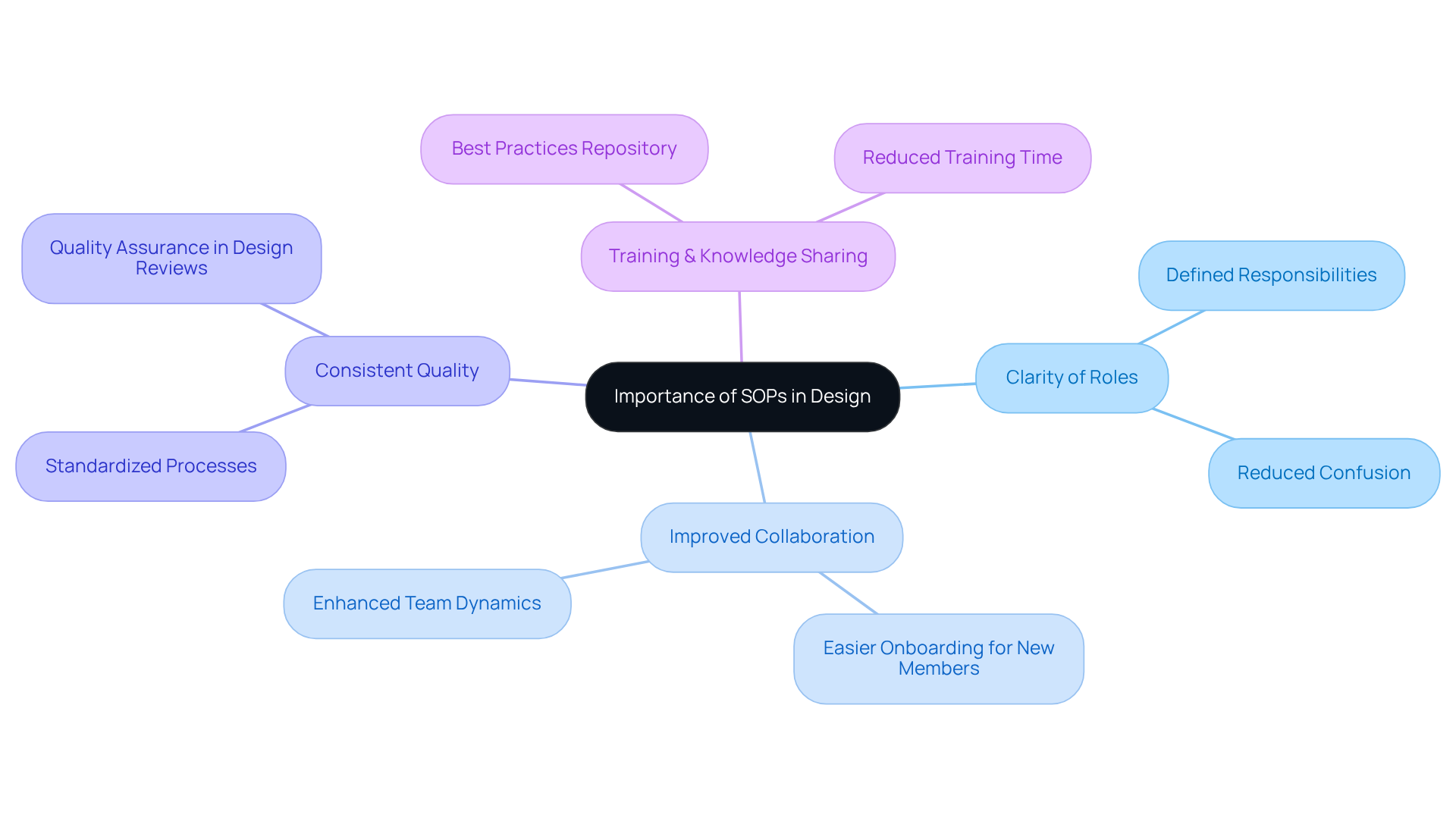
You might be wondering why the teams is such a big deal. Well, they’re like the glue that holds everything together, making sure everyone knows their roles and responsibilities. By having a , teams can cut down on mistakes and keep things running smoothly.
Imagine this: when everyone’s on the same page, . New team members can jump right in without feeling lost, and the results? They’re often way better! Take a , for instance. A well-defined can help ensure that all participants stick to the same standards, leading to consistent quality in what you produce.
But that’s not all! SOPs also act as a sop for design, providing a treasure trove of . They’re super helpful for within the team. So, if you’re looking to boost your team’s efficiency and camaraderie, it might be time to take a closer look at your . What do you think?
Define Objectives and Identify Stakeholders
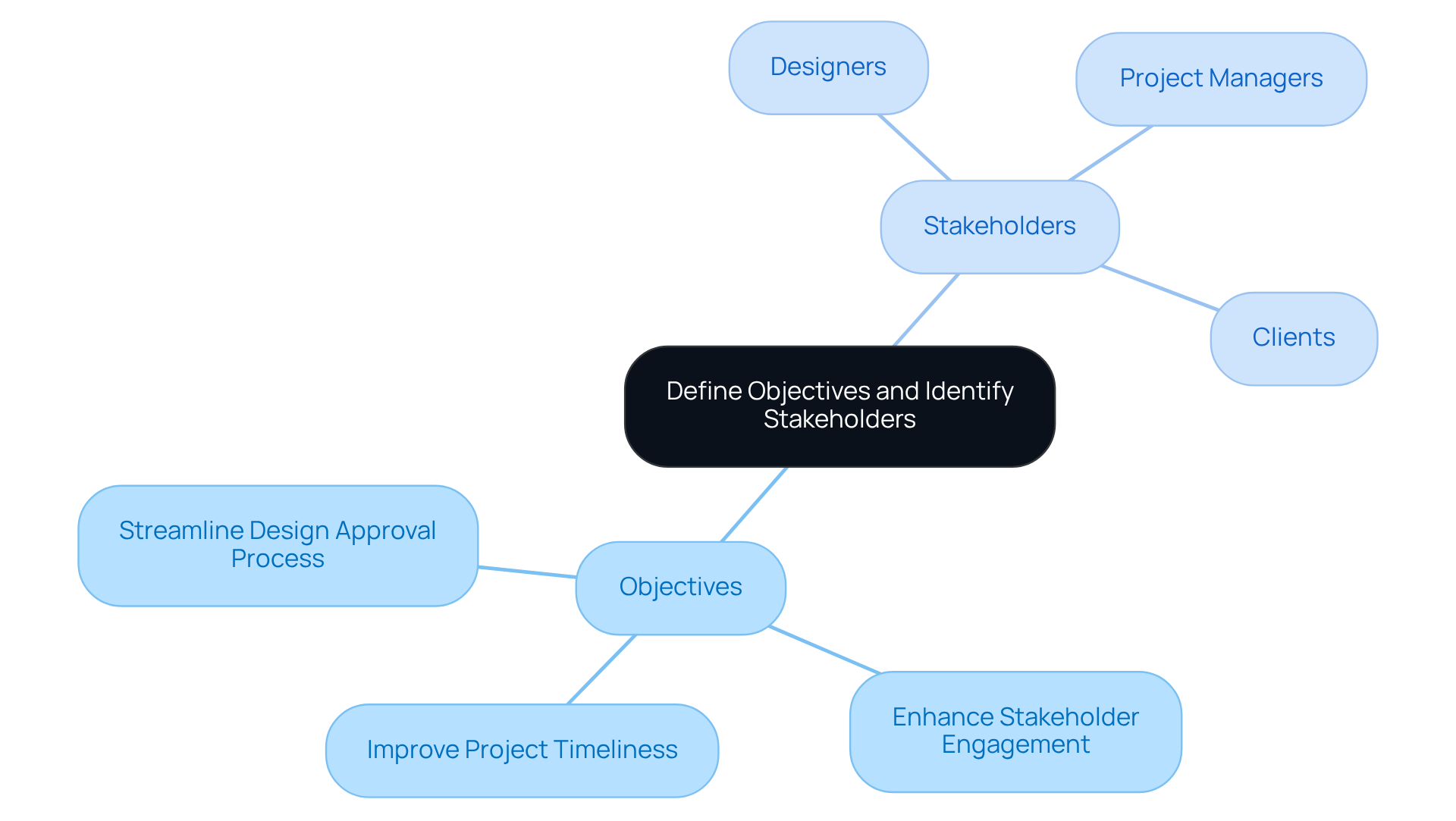
You might be wondering where to start with your , right? Well, it’s all about clearly outlining your specific objectives. Think about which procedures really need and what you hope to achieve. For instance, if you want to streamline the , explain how your will simplify reviews and approvals.
Now, let’s discuss the key players in the , which include:
- Designers
- Project managers
- Clients
Engaging these folks early on in the SOP development is crucial. Their insights and needs should be woven into the fabric of your procedures. This way, you’re not just creating something effective; you’re crafting something that everyone can get behind. Research shows that companies with strong strategies are 40% more likely to finish projects on time and within budget. That’s a big deal! It really highlights how collaboration can drive .
And here’s another nugget: organizations that actively seek see a 20% boost in engagement rates. This is a game-changer for SOP for design development because it fosters a sense of ownership and commitment among team members. As Jack Welch famously said, "There are only three measurements that tell you nearly everything you need to know about your organization’s overall performance: , customer satisfaction, and cash flow." This really drives home the importance of involving stakeholders in your SOP development process.
Document Step-by-Step Procedures Clearly
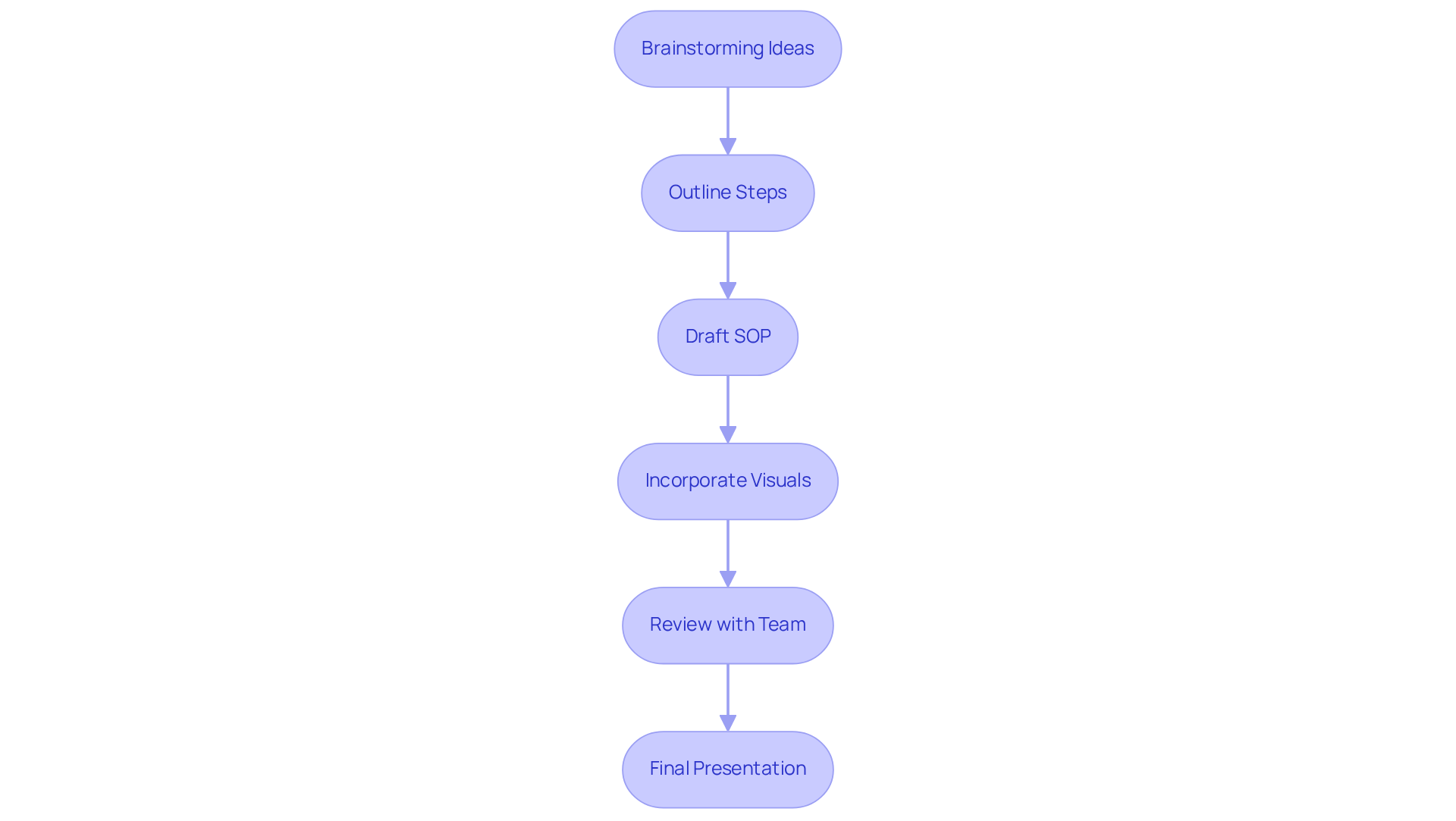
You might be wondering how to effectively document your SOP for design. Well, it’s all about breaking down each procedure into . Using straightforward language is key - avoid the jargon! This way, everyone can easily grasp the instructions. For example, when you’re recording the SOP for design regarding the procedure for , outline each step from the initial brainstorming to the final presentation.
Speaking of clarity, . Research shows that instead of just written instructions. Pretty impressive, right? Plus, employing an SOP for design through across different procedures helps keep things consistent, making it easier for everyone to follow along.
Now, let’s dive into how can help. With its command-based functionality, you can effortlessly create and update these templates, ensuring they stay relevant and accurate in our ever-changing business world. And here’s a thought: involving your group members in the can lead to more and greater support from the team.
This organized approach not only enhances clarity but also boosts overall group performance. Organizations with clearly defined procedures often see . By leveraging 's solution, your group can access documentation instantly, streamlining workflows and enhancing productivity - no more unnecessary meetings!
Review and Validate the SOP Before Implementation
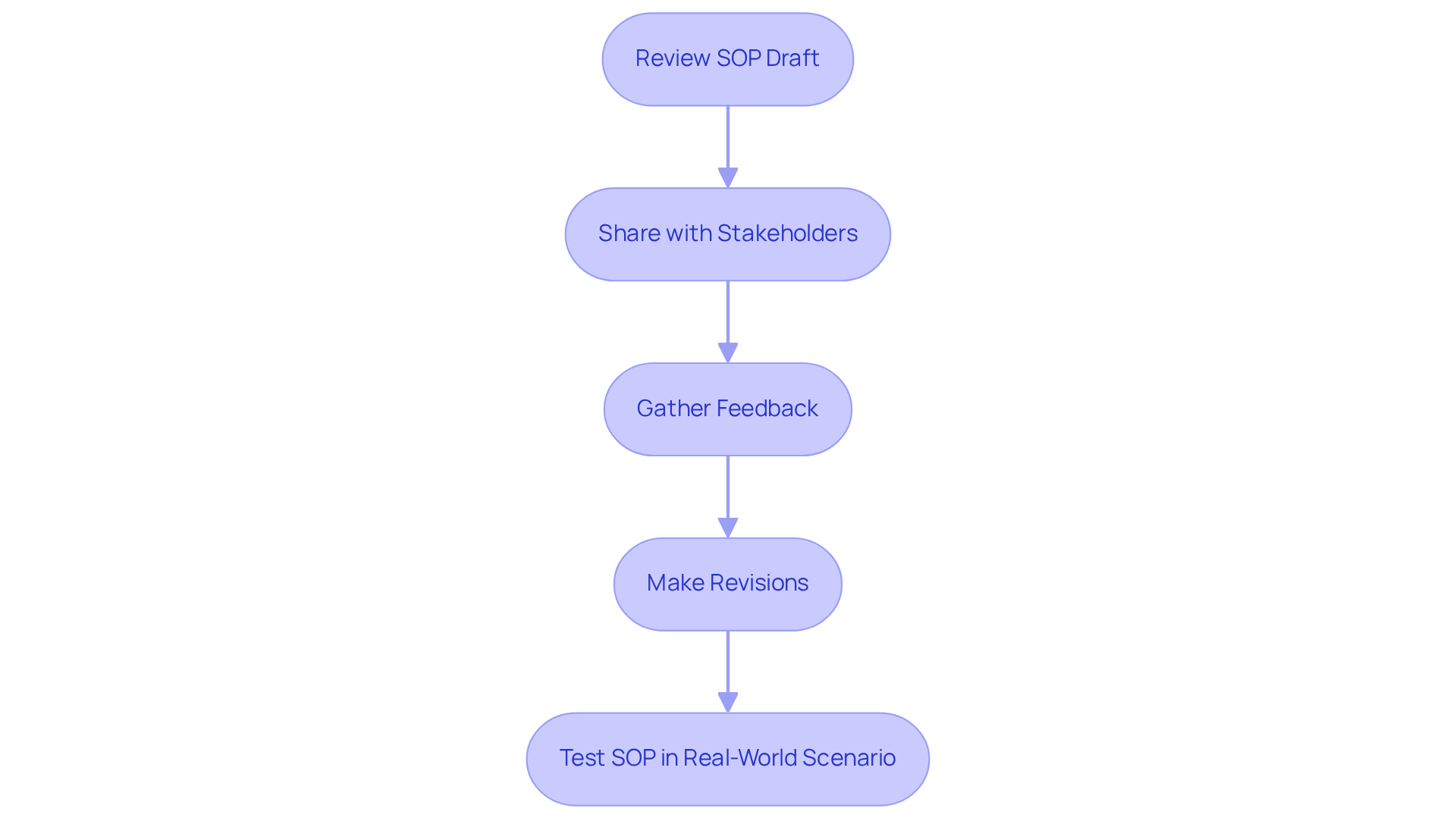
Before you dive into , have you thought about doing a thorough review first? Sharing the draft with your stakeholders can be a game-changer. By , you can spot any . This collaborative approach not only but also helps everyone feel a sense of ownership in the process.
For instance, let’s say a designer flags a missing step in the mockup process. Addressing that feedback can really enhance your SOP, making it more . Once you’ve made those revisions, it’s time to in a real-world scenario. This way, you can ensure it works just as you intended!
Implement Training and Regularly Update the SOP
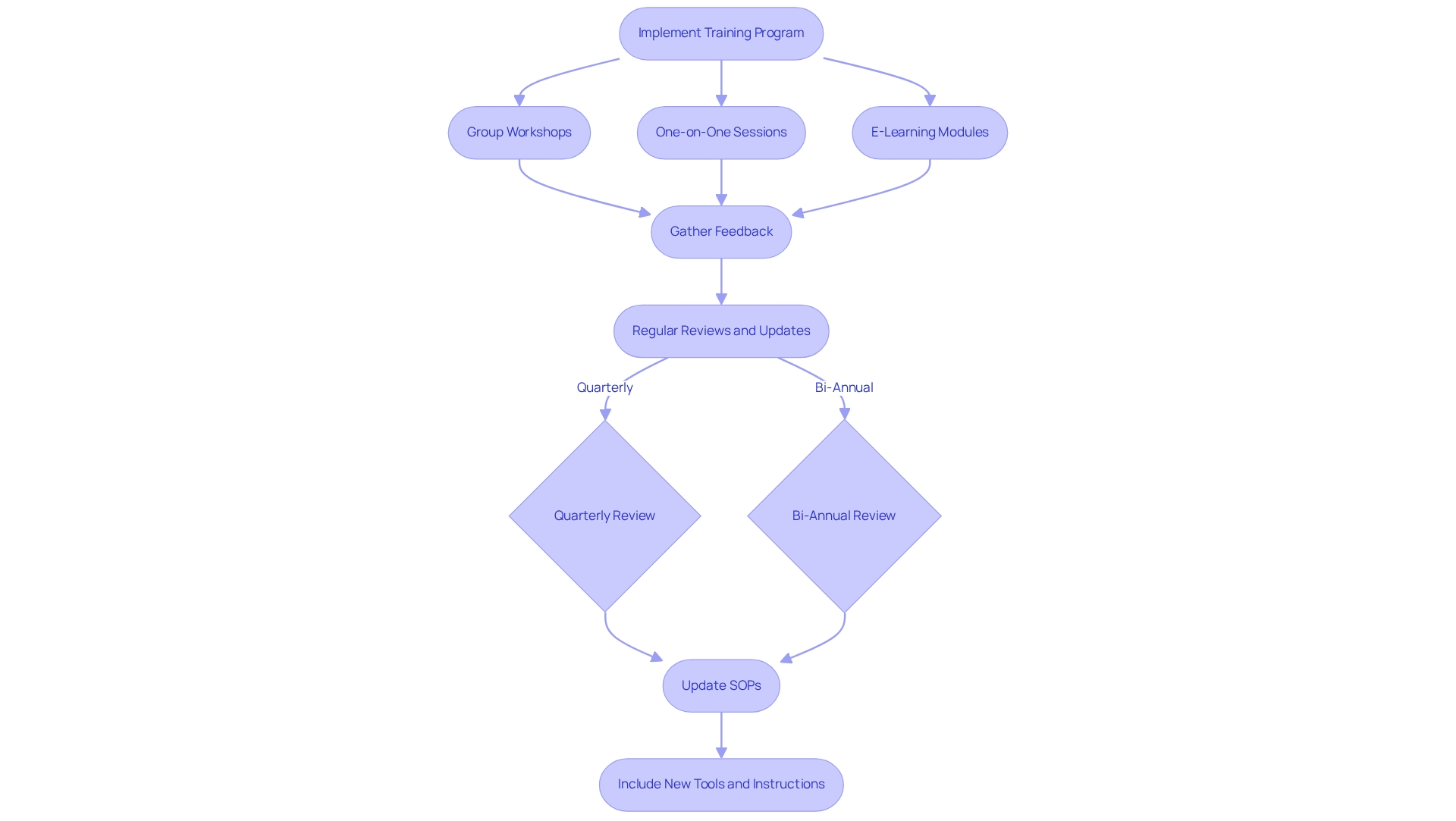
Once you’ve got your procedures all set, it’s super important to roll out a solid . You want everyone to really get how to use them effectively, right? This training can look different depending on your group-think workshops, one-on-one sessions, or even e-learning modules. And here’s a fun fact: 58% of employees actually prefer . This can really boost engagement and help everyone retain what they learn.
Now, let’s talk about keeping those procedures fresh. Regular reviews and updates are key to making sure everything reflects any changes in processes or team dynamics. How about setting up a ? Maybe quarterly or bi-annually? This way, you can keep your relevant and efficient. For example, if you introduce a new design tool, make sure to update the relevant procedures right away with clear instructions on how to use it effectively.
This proactive approach not only boosts team performance but also creates a culture of continuous improvement. You want your design processes to stay agile and responsive to whatever comes your way. Plus, did you know that see a whopping 218% higher income per employee compared to those that don’t? That really highlights the value of investing in .
By keeping your updated, you can also snag some significant cost savings, which drives overall efficiency and profitability. So, what do you think? Ready to dive into creating that ?
Conclusion
You might be wondering how to make your design team run like a well-oiled machine. Well, establishing effective Standard Operating Procedures (SOPs) is a fantastic way to foster collaboration, boost efficiency, and ensure consistent quality in your output. By clearly defining roles, responsibilities, and processes, you can minimize errors and streamline workflows, leading to better results all around. Plus, having SOPs in place helps new team members acclimate quickly and serves as a handy repository of best practices that can elevate your design process.
Now, let’s dive into what this article has covered about developing SOPs. We’ve emphasized the importance of defining objectives and engaging stakeholders right from the start. It’s crucial to document step-by-step procedures clearly, review and validate them before implementation, and keep up with ongoing training and updates. Each of these steps is vital in ensuring that your SOPs stay relevant and effective, contributing to a culture of continuous improvement within your design team.
In conclusion, the impact of well-crafted SOPs on your design team’s efficiency is huge! By investing time and resources into developing and maintaining these procedures, you can unlock significant benefits like increased engagement, higher quality outputs, and improved operational success. So, why not embrace the power of SOPs? Take those proactive steps toward enhancing your design processes, and watch your team become more agile and responsive!
Frequently Asked Questions
What is the importance of SOPs in design teams?
SOPs are crucial for design teams as they clarify roles and responsibilities, reduce mistakes, and facilitate smooth operations. They improve collaboration and help new team members integrate quickly, leading to better results.
How do SOPs affect collaboration within design teams?
SOPs ensure that everyone is aligned and following the same standards, making collaboration easier. This alignment leads to consistent quality in the outputs of the design process.
What additional benefits do SOPs provide for design teams?
SOPs serve as a repository of best practices, which are beneficial for training and knowledge sharing within the team. They can enhance team efficiency and camaraderie.
How should one start developing SOPs for design?
Start by clearly outlining specific objectives and identifying which procedures need standardization. Define what you hope to achieve with your SOPs, such as streamlining the design approval process.
Who are the key stakeholders in the SOP development for design?
Key stakeholders include designers, project managers, and clients. Engaging these individuals early in the development process is essential for creating effective SOPs.
Why is stakeholder engagement important in the SOP development process?
Engaging stakeholders ensures their insights and needs are incorporated into the SOPs, fostering a sense of ownership and commitment. Companies with strong stakeholder engagement are more likely to complete projects on time and within budget.
What impact does feedback from stakeholders have on SOP development?
Actively seeking feedback from stakeholders can lead to a 20% increase in engagement rates, which is beneficial for the development of effective SOPs.
👍
What others are liking


5 Steps to outline your ideal documentation structure
5 MINS READ
Where to start the your journey of mapping out your ideal documentation structure, aligning it with the very heartbeat of your organization?
Defining a winning level of detail in your process
3 MINS READ
What is too much detail, and what is too little? This article described in that winning level detail about what detail is enough.


