

Scaling Businesses with Documentation
|
April 29, 2026
|

Create a Company History Timeline: Steps for Success
Key Highlights
- A company history timeline should tell an engaging story to enhance brand narrative and provide context for new hires.
- Key milestones to include are founding dates, product launches, partnerships, leadership changes, and challenges faced.
- Involving team members from different departments enriches the timeline and fosters employee engagement.
- Limit the timeline to 5-10 key milestones for clarity and focus.
- Use tools like Visme or Venngage to improve visual appeal and user-friendliness of the timeline.
- Select appropriate software based on team skills and the complexity of the timeline; SowFlow is recommended for its organisational features.
- Anticipate common issues such as information overload and technical difficulties, and prioritise visual coherence to enhance clarity.
- A streamlined timeline creation process can improve decision-making confidence and effectively convey the company's story.
Introduction
Crafting a compelling company history timeline is more than just listing dates; it’s about weaving a narrative that reflects your organization’s journey and achievements. You might be wondering why this matters. Well, this timeline serves as a vital tool for enhancing brand identity and engaging new employees and stakeholders alike. But with so much information out there, how can you effectively distill your history into a clear and engaging format? Now, let’s dive into the essential steps, tools, and strategies for creating a successful company history timeline that resonates with both internal and external audiences.
Understand the Importance of a Company History Timeline
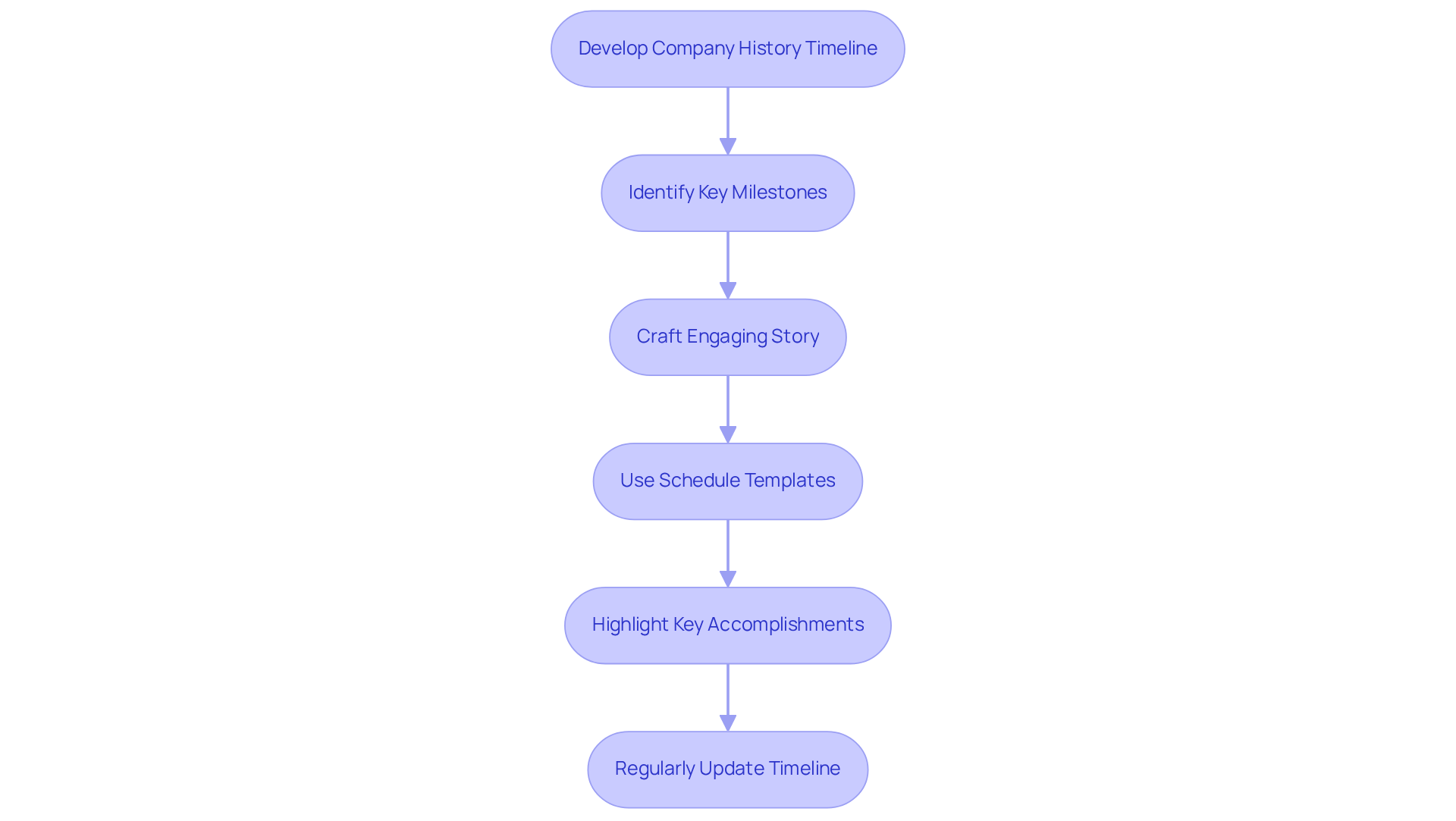
You might be wondering how to develop a that goes beyond just being a list of dates. Well, it’s all about that showcases your entity's journey. A thoughtfully designed schedule not only enhances your brand narrative but also provides during orientation. Plus, it serves as a . By recognizing the importance of this schedule, you can highlight from your .
This step is crucial—it helps you pinpoint that will contribute to your and turns the schedule into a valuable resource for your organization. Take Pepsi Brattleboro, for example; they’ve effectively used a systematic approach to present their in an engaging and accessible way for employees. Cardinal Meats has also tapped into its to bolster brand identity and captivate stakeholders with rich content.
And here’s a fun fact: expert insights suggest that a well-crafted schedule can build trust and foster emotional connections, making it a must-have tool for onboarding and beyond. As Evan Brooks points out, using schedule templates in your visual storytelling can really enhance understanding and boost engagement. So, keep in mind that regularly updating your organizational background is key to avoiding the perception of stagnation and ensuring your narrative remains relevant.
Outline Key Milestones and Events
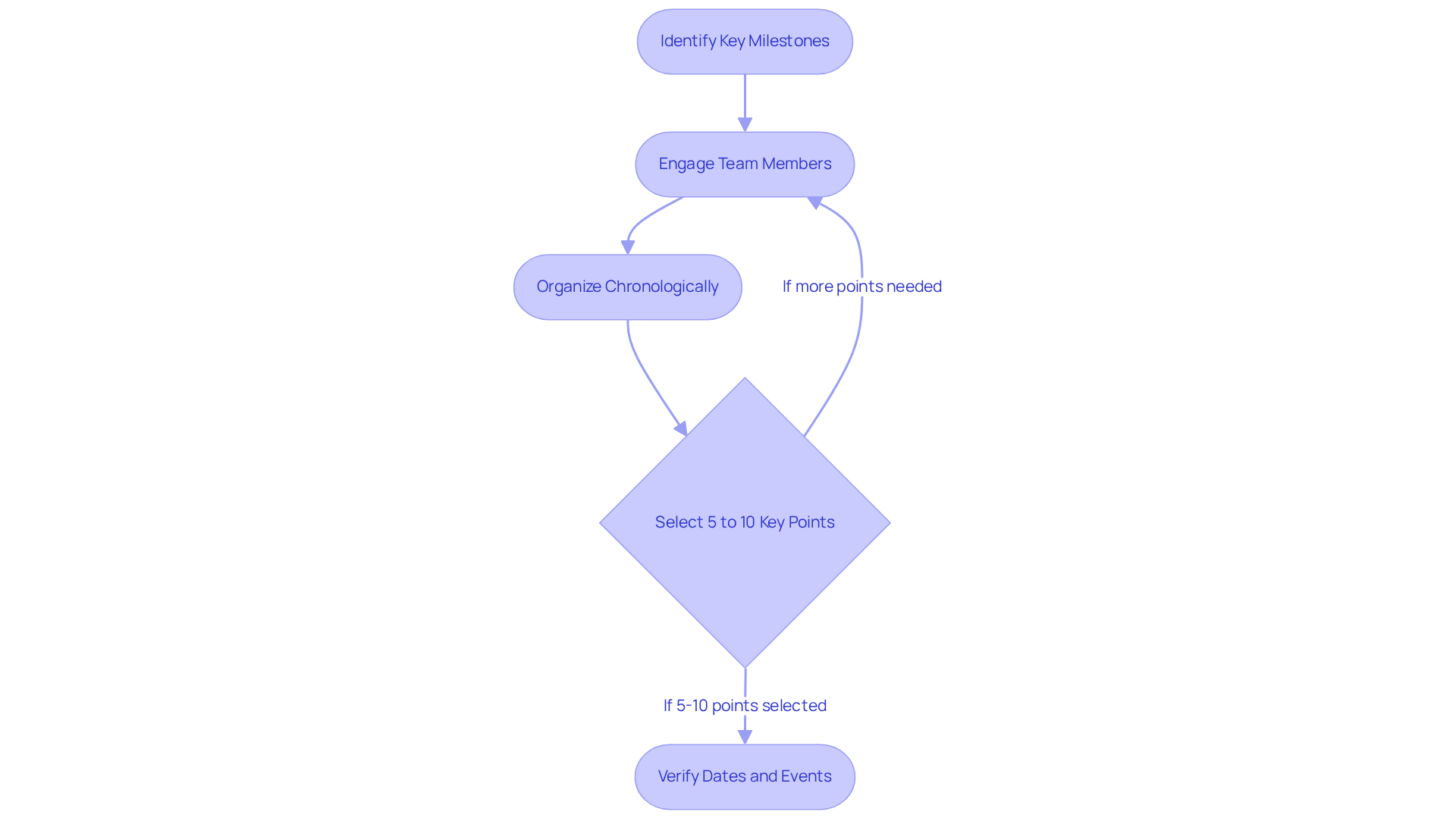
You might be wondering how to create an engaging . Well, start by pinpointing those that have really shaped your organization. Think about like founding dates, product launches, major partnerships, and those critical leadership changes. And don’t forget to record the obstacles you’ve faced and how you tackled them—this adds important context and richness to your .
from different departments is super important! Their diverse perspectives can shine a light on what they see as the most impactful events. This collaborative effort not only enriches your but also fosters a and engagement among your employees. Once you’ve gathered a thorough list, organize these events chronologically to create a clear and captivating narrative that illustrates your organization’s .
Now, you might be thinking about how many key points to include. A good rule of thumb is to stick to between 5 to 10 milestones; this helps keep things clear and focused. And if you want to jazz up the , consider using tools like Visme or Venngage—they can make your schedule more attractive and user-friendly, making sharing and presenting a breeze. Lastly, double-check those dates and events to ensure accuracy; it’s all about building credibility and trust in your documented history.
Utilize Effective Tools for Timeline Creation
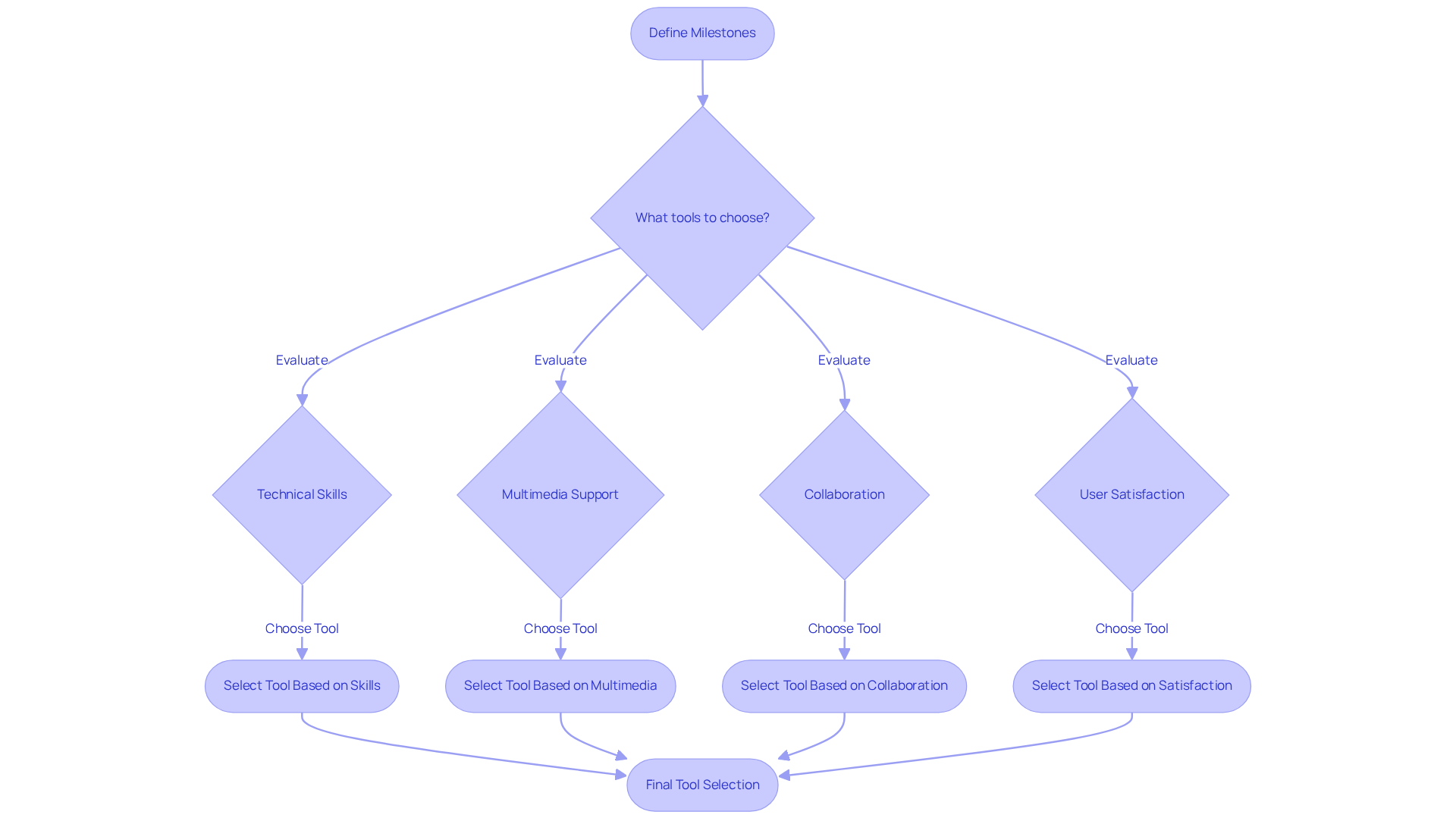
Once you’ve defined your milestones, you might be wondering what’s next. The next step is to pick the right tools to develop your schedule. SowFlow is here to help! It offers great support for , making it super easy to . With unlimited access to all software features, , and , you can structure your documents effortlessly and set up a documentation system that really boosts .
Now, when choosing a tool, think about your team’s technical skills and how complex your schedule is. If you’re planning to add multimedia elements like images or videos, make sure to select a platform that supports those features. And don’t forget about collaboration! You want a tool that allows team members to contribute and provide feedback easily.
By leveraging SowFlow's strategic assistance, you can create a visually appealing and informative that effectively showcases the history of your organization. It’s also a good idea to look for and integration capabilities to ensure the software fits your team’s needs. SowFlow really shows how can simplify planning processes, making them a must-have for .
Troubleshoot Common Timeline Creation Issues
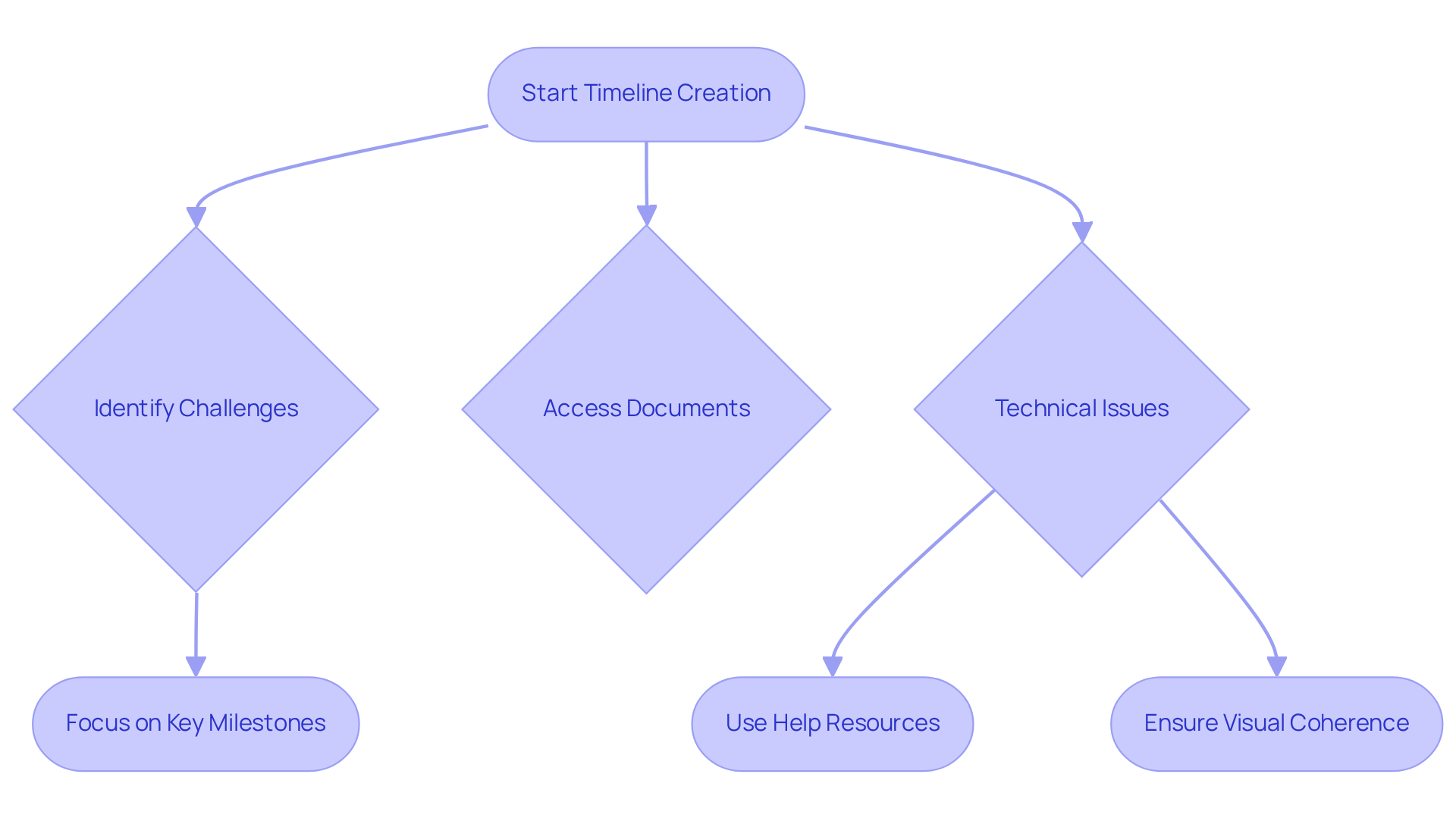
You might be wondering why developing a can be so tricky. With all the information out there, it can feel overwhelming. Did you know that 73% of professionals struggle to access across different time zones? That can really throw a wrench in your scheduling plans! To tackle this , focus on that fit your narrative. This approach not only simplifies decision-making but also makes your schedule clearer.
Now, let’s talk about those pesky with your software. If you run into issues, don’t hesitate to tap into the tool’s help resources or community forums for some troubleshooting tips. And here’s a friendly reminder: keeping is super important! Avoid clutter by sticking to consistent fonts, colors, and layouts. Research shows that teams using fragmented communication systems see a 25% drop in decision-making confidence. So, a really does matter!
By anticipating these challenges and using , you can manage the creation process more smoothly, leading to a polished and coherent final product. Remember, emphasizing clarity and organization not only but also ensures that it effectively tells your company’s story.
Conclusion
Creating a compelling company history timeline is essential for telling your organization’s story, showcasing milestones, and engaging everyone from employees to stakeholders. You might be wondering how to turn a simple list of dates into a rich narrative. Well, by doing so, companies can effectively communicate their journey, build trust, and foster emotional connections within their teams.
Now, let’s dive into some critical steps for crafting an impactful timeline:
- Identify key milestones
- Utilize effective tools
- Engage team members from different departments
- Address any technical difficulties
- Keep everything visually coherent
These steps are crucial for producing a polished final product that truly reflects your organization’s history.
In summary, a well-constructed company history timeline isn’t just a valuable resource for onboarding; it’s also a testament to your company’s growth and resilience. So, why not invest some time and effort into this process? It can significantly enhance your brand identity and internal culture. By embracing these best practices, you can create a narrative that resonates with both current and future employees, ultimately reinforcing the importance of your unique journey.
Frequently Asked Questions
What is the purpose of a company history timeline?
A company history timeline serves to craft an engaging story that showcases the entity's journey, enhances brand narrative, provides context for new hires, and acts as a strategic reference point.
How can a company history timeline benefit new hires?
It offers essential context during orientation, helping new hires understand the company's journey and key accomplishments.
Can you give examples of companies that effectively use a company history timeline?
Pepsi Brattleboro and Cardinal Meats are examples of companies that have effectively used a systematic approach to present their company history timeline, enhancing brand identity and engaging stakeholders.
What are the advantages of a well-crafted company history timeline?
A well-crafted timeline can build trust, foster emotional connections, and serve as a valuable tool for onboarding and ongoing employee engagement.
How can visual storytelling enhance a company history timeline?
Using schedule templates in visual storytelling can enhance understanding and boost engagement, making the timeline more accessible and impactful.
Why is it important to regularly update a company history timeline?
Regular updates are key to avoiding the perception of stagnation and ensuring that the company's narrative remains relevant and engaging.
List of Sources
- Understand the Importance of a Company History Timeline
- historyassociates.com (https://historyassociates.com/how-corporate-histories-help-companies-shape-a-better-future)
- columncontent.com (https://columncontent.com/company-history)
- consortiumbiz.co.uk (https://consortiumbiz.co.uk/using-your-company-history-as-a-marketing-tool-celebrate-your-heritage)
- visme.co (https://visme.co/templates/infographics/company-history-timeline-infographic-1425279634)
- ones.com (https://ones.com/blog/knowledge/creative-ways-use-timeline-template-visual-storytelling)
- Outline Key Milestones and Events
- 110 must-know startup statistics for 2025 | Embroker (https://embroker.com/blog/startup-statistics)
- columncontent.com (https://columncontent.com/company-history)
- slickplan.com (https://slickplan.com/blog/creating-timelines)
- curzon.ie (https://curzon.ie/blog/4-everyday-company-milestones-that-can-make-industry-headlines)
- elasticpath.com (https://elasticpath.com/studio/blog/startup-quotes)
- Utilize Effective Tools for Timeline Creation
- 50 Inspirational Planning Quotes: A Comprehensive Guide (https://nimblework.com/blog/inspirational-planning-quotes)
- suptask.com (https://suptask.com/blog/quotes-about-planning)
- workzone.com (https://workzone.com/blog/project-planning-quotes)
- 34 of the Best Planning Quotes (https://projectmanager.com/blog/planning-quotes)
- 19 Timeless Project Management Quotes for Success (https://proofhub.com/articles/project-management-quotes)
- Troubleshoot Common Timeline Creation Issues
- leaveboard.com (https://leaveboard.com/planning-quotes)
- lumapps.com (https://lumapps.com/insights/blog/information-overload)
- 19 Timeless Project Management Quotes for Success (https://proofhub.com/articles/project-management-quotes)
- Dealing with information overload: a comprehensive review - PMC (https://pmc.ncbi.nlm.nih.gov/articles/PMC10322198)
- 139 Project Management Quotes to Inspire Your Next Project (https://plaky.com/blog/project-management-quotes)
👍
What others are liking


5 Steps to outline your ideal documentation structure
5 MINS READ
Where to start the your journey of mapping out your ideal documentation structure, aligning it with the very heartbeat of your organization?
Defining a winning level of detail in your process
3 MINS READ
What is too much detail, and what is too little? This article described in that winning level detail about what detail is enough.


