

Building a Documentation Culture
|
April 29, 2026
|

Understanding the Role of a Training Programme Manager in Organizations
Key Highlights
- A training programme manager coordinates development programmes to align with organisational goals, enhancing staff skills and competencies.
- Effective training programmes can lead to a 218% increase in revenue per employee and boost staff productivity and retention.
- Key responsibilities include needs assessment, programme design, implementation, evaluation, budget management, and stakeholder communication.
- Essential skills for training programme managers include leadership, communication, project management, analytical skills, adaptability, and instructional design.
- Organisations with strong development programmes experience a 24% increase in profit margins and a significant reduction in turnover rates.
- Training programme managers play a vital role in fostering a culture of continuous learning, driving innovation, and ensuring competitive advantage.
Introduction
You might be surprised to learn that the role of a training programme manager is often underestimated. Yet, this position serves as a crucial backbone for organizational growth and employee development. By strategically aligning training initiatives with business objectives, these professionals not only enhance staff skills but also foster a culture of continuous learning. This culture can significantly boost productivity and retention—sounds great, right?
However, many organizations still struggle with engagement and resource allocation in their development programs. So, how can training programme managers tackle these challenges? What strategies can they employ to maximize their impact and drive success within their teams? Let’s dive into some ideas that could make a real difference!
Define the Role of a Training Programme Manager
You might be wondering what a Programme Manager really does. Well, the plays a crucial role in coordinating the design, implementation, and assessment of within an organization. This means they ensure that development initiatives are not just random acts but are strategically aligned with the organization's goals, effectively . Think of them as the essential link between management and staff, enhancing communication so the can .
Their impact is pretty significant when it comes to and development, which is vital for any training programme manager in an organization looking to grow and adapt. Did you know that organizations with see a whopping 218% greater revenue per staff member? That really highlights how effective educational management can drive overall business performance. Plus, 90% of HR managers agree that ramp up and growth, and 86% believe they help with retention.
Now, let’s dive into some more interesting stats:
- 72% of organizations recognize that
- 70% of employees would actually think about leaving their current job for a company that prioritizes their growth and development
By focusing on development, organizations not only equip their workforce with the necessary skills but also build loyalty and engagement, driving success in a competitive landscape. However, and time constraints in program implementation are real hurdles that need addressing to really maximize the effectiveness of these initiatives.

Outline Key Responsibilities of a Training Programme Manager
As a training programme manager, you might be wondering what your key responsibilities are. Let’s break it down:
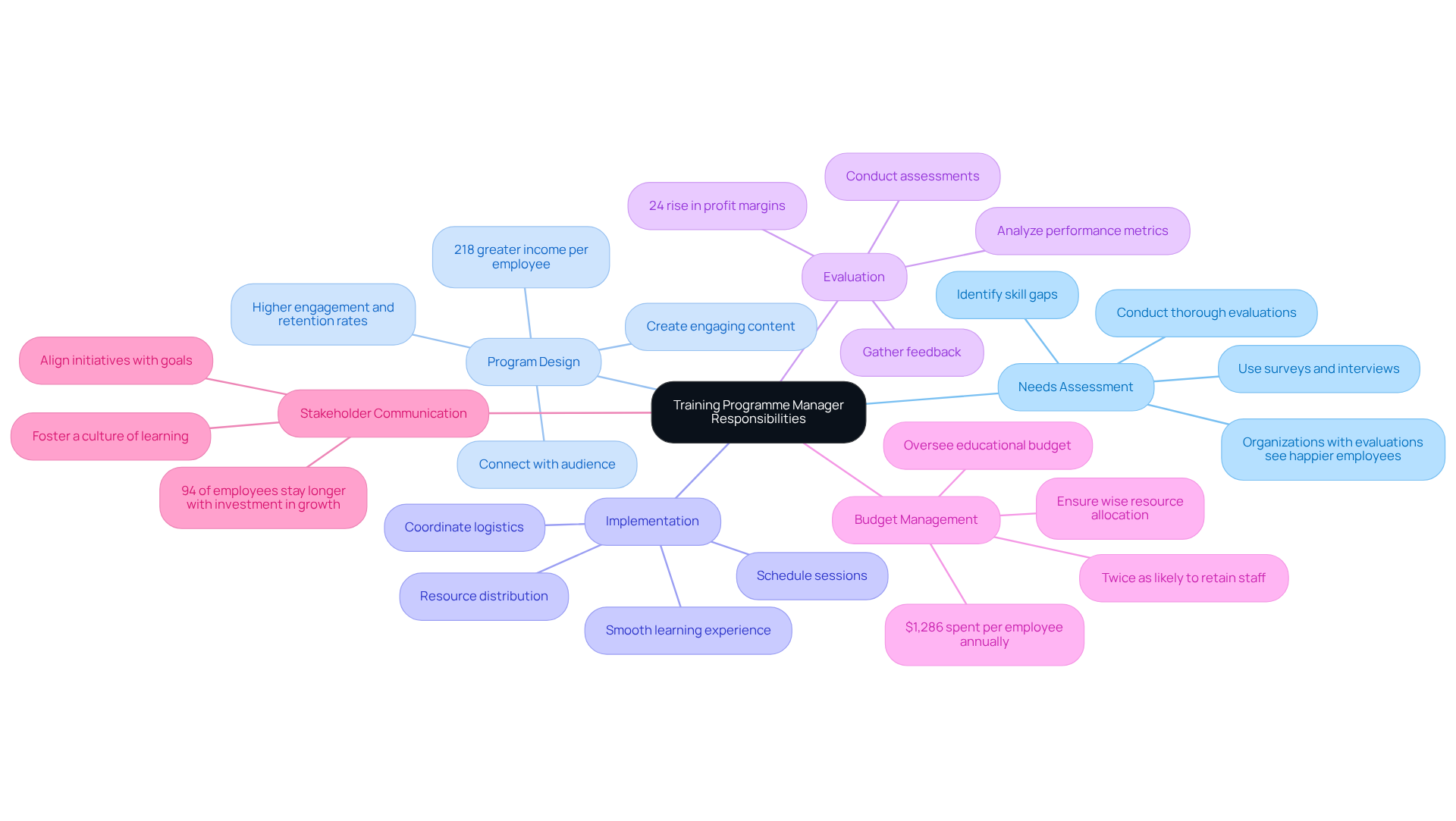
- Needs Assessment: First off, conducting thorough is super important for figuring out development requirements. This means using surveys, interviews, and assessments to spot those pesky skill gaps. Research shows that organizations with organized are way better at customizing their , leading to happier, more productive employees.
- Program Design: Next up is creating engaging and relevant . A well-structured initiative not only tackles the identified needs but also connects with your audience, boosting learning outcomes. Did you know that companies investing in enjoy significantly higher staff engagement and retention rates? Plus, those with extensive development programs see a whopping 218% greater income per employee compared to those without—talk about a financial win!
- Implementation: Now, let’s talk logistics. Coordinating the logistics of educational sessions is key! This includes scheduling, resource distribution, and making sure participants can easily register. When done right, effective execution leads to a smoother , which is crucial for getting everyone on board.
- Evaluation: Assessing how well your development programs are working is vital for . Gathering feedback, conducting assessments, and diving into performance metrics are all part of the game. Organizations that regularly evaluate their often see a 24% rise in profit margins—definitely a perk! And those firms that invest in development? They enjoy a 24% greater profit margin overall, showing just how important assessment is.
- : Let’s not forget about the budget! Overseeing the educational budget is a big part of your role. You’ll need to ensure that resources are allocated wisely, balancing quality with cost-effectiveness. On average, companies spend about $1,286 per employee each year for development. This highlights just how crucial strategic is, especially since organizations that invest in are twice as likely to retain their staff.
- : Finally, working with different departments is essential to align development initiatives with your organization’s goals. Effective communication fosters a culture of learning and ensures that development programs mesh well with broader business objectives. Here’s a fun fact: 94% of employees are more likely to stick around at a company that invests in their career growth. That’s the power of effective communication in action!
So, there you have it! The responsibilities of a training programme manager not only shape your role but also significantly impact your organization’s success.
Identify Essential Skills for Training Programme Managers
include:
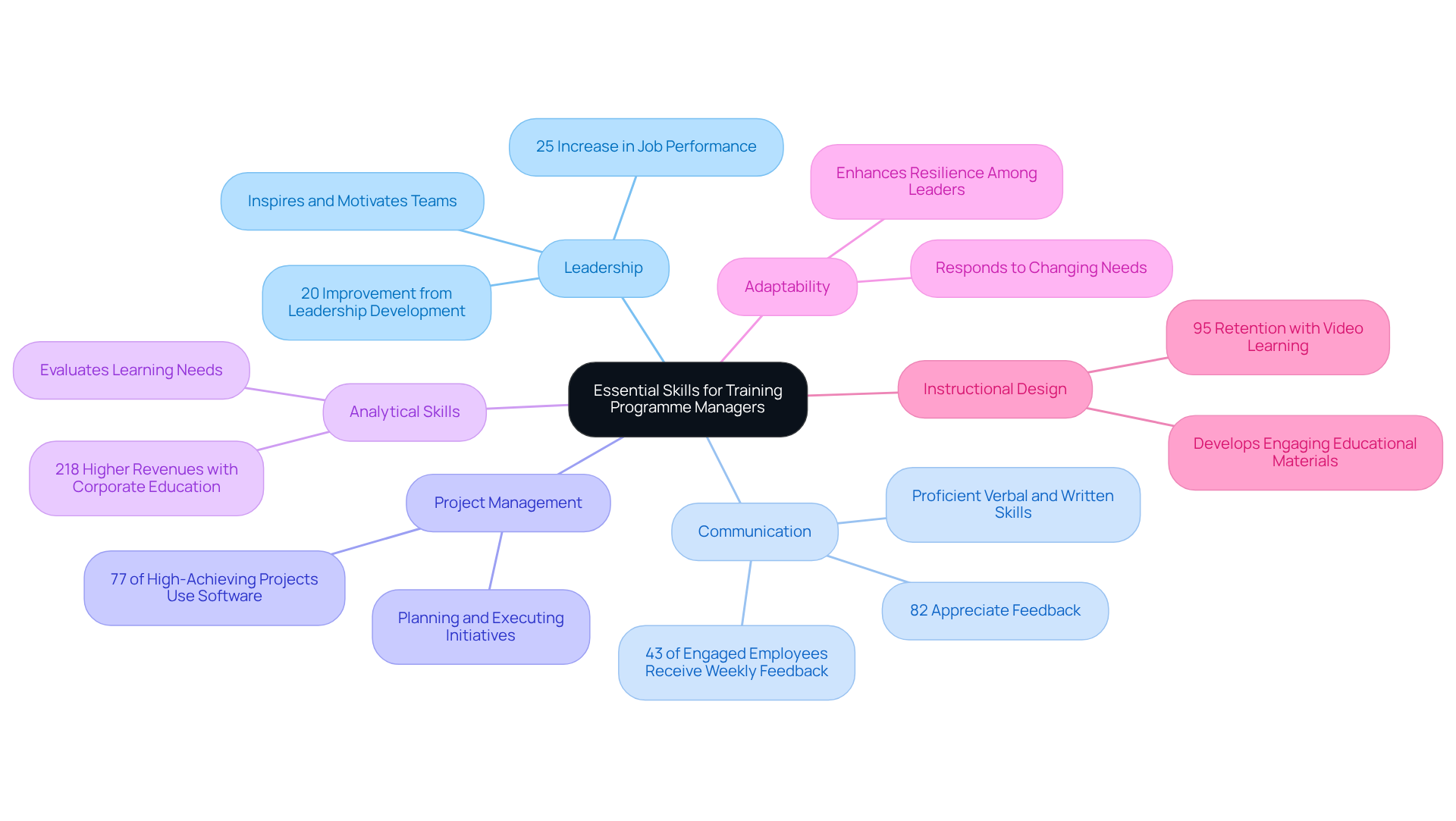
- Leadership: You might be wondering why leadership is so crucial. Well, the ability to inspire and motivate teams is paramount. Effective leaders cultivate a culture of learning, which is vital since 90% of HR managers believe that a training programme manager is essential for boosting employee productivity and growth. In fact, , and investing in leadership development can enhance job performance by 20%. So, it’s safe to say that leadership is an essential element of management education.
- Communication: Let’s talk about communication. Proficient verbal and written skills are essential for articulating educational objectives and facilitating discussions. Consistent feedback and acknowledgment from leaders can really boost staff morale—82% of individuals appreciate feedback! Plus, did you know that 43% of highly engaged employees receive feedback at least once a week? This is key for the training programme manager to keep everyone engaged in development programs.
- Project Management: Now, onto project management. A training programme manager ensures expertise in planning, executing, and overseeing educational initiatives to guarantee they’re completed on time and within budget. —77% of high-achieving projects employ project management software. This really emphasizes the significance of organized management by a training programme manager in education.
- Analytical Skills: Have you thought about analytical skills? For a training programme manager, the ability to evaluate learning needs and assess initiative effectiveness through data analysis is essential. Organizations that invest in leadership development often report enhanced business performance. In fact, companies with comprehensive corporate education programs have 218% higher revenues per staff member than those without structured development. This highlights the necessity for in managing educational initiatives.
- Adaptability: Flexibility is another key skill. Being a training programme manager requires the ability to respond to changing organizational needs and employee feedback, which is essential for continuous improvement. Leadership development that emphasizes adaptability can significantly enhance resilience among leaders, enabling them to navigate challenges effectively.
- Instructional Design: Lastly, let’s dive into instructional design. For a training programme manager, is crucial for developing effective and engaging educational materials. Incorporating multimedia techniques, especially video, can really improve learning outcomes. Did you know that ? This approach accommodates various learning preferences, ensuring that education is both accessible and impactful.
Explain the Importance of Training Programme Managers in Organizations
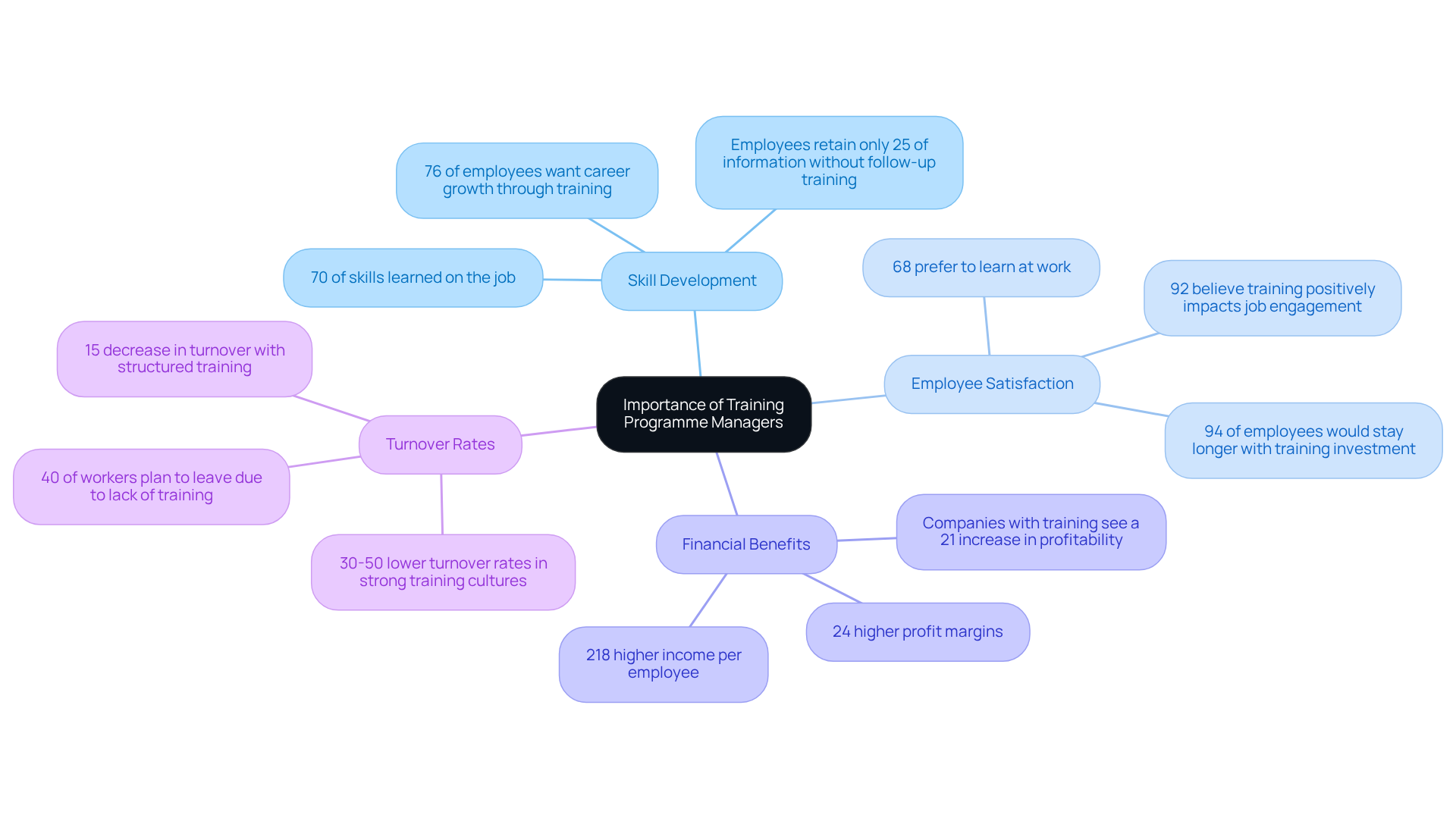
You might be wondering just how important are to organizations. Well, they’re absolutely vital! They help ensure that needed for . By adopting focused , they really boost staff performance, leading to greater job satisfaction and lower turnover rates. Did you know that companies investing in extensive educational initiatives experience 218% higher income per employee compared to those without structured instruction? Pretty impressive, right? Plus, companies with strong development programs enjoy 24% higher profit margins, which really highlights the .
Now, let’s think about this: effective development leads to a more skilled workforce, which is essential for maintaining a competitive edge in the market. For instance, organizations that foster robust development cultures see a 30-50% lower turnover rate. That really shows the significance of ! Training initiatives not only drive financial success but also spark innovation and , aligning perfectly with strategic goals. And here’s a fun fact: 68% of staff members prefer to learn at work, which underscores the effectiveness of on-the-job training.
In essence, the role of is pivotal in shaping the future of the workforce and driving organizational success. Just think about it—94% of employees would stick around longer with companies that invest in their . As Roy H. Williams aptly said, 'Training is not an expense, but an investment in human capital.' So, what are you waiting for? Let’s dive into how we can make the most of these training opportunities!
Conclusion
You might be wondering just how crucial a training programme manager is to an organization’s success. Think of them as the vital link between management and staff, ensuring that development initiatives truly align with those big strategic goals. By nurturing a culture of continuous learning, these professionals not only help enhance employee skills but also make a real impact on overall organizational performance. Their work is key in creating an environment where staff feel valued and eager to grow, which in turn boosts retention and productivity.
Now, let’s dive into the key responsibilities of a training programme manager. They include:
- Conducting needs assessments
- Designing engaging programs
- Managing budgets
- Evaluating the effectiveness of training initiatives
Each of these tasks is crucial in shaping a workforce that’s not just skilled, but also adaptable to the ever-changing market demands. And the statistics? They highlight the real benefits of investing in employee development, showing that organizations prioritizing training often see significant increases in revenue and employee satisfaction.
In conclusion, the importance of training programme managers is hard to overstate. As organizations aim to stay competitive, the demand for skilled professionals who can effectively manage development programs is growing. Investing in training not only boosts individual performance but also drives overall organizational success. Embracing this commitment to learning and development isn’t just a smart move; it’s essential for building a resilient and engaged workforce ready to tackle the challenges of tomorrow.
Frequently Asked Questions
What is the role of a training programme manager?
The training programme manager coordinates the design, implementation, and assessment of development programs within an organization, ensuring that these initiatives align with the organization's goals and enhance staff skills and competencies.
How does a training programme manager contribute to an organization?
They serve as a link between management and staff, improving communication to identify and address developmental needs, which fosters a culture of continuous learning and development.
What impact do development programs have on organizational performance?
Organizations with robust development programs experience 218% greater revenue per staff member, indicating that effective educational management significantly drives overall business performance.
What do HR managers think about development programs?
90% of HR managers believe that development programs enhance staff productivity and growth, while 86% think they contribute to employee retention.
What is the significance of e-learning in organizations?
72% of organizations recognize that e-learning provides them with a competitive edge.
How do employees feel about growth and development opportunities?
70% of employees would consider leaving their current job for a company that prioritizes their growth and development.
What challenges do training programme managers face?
Common challenges include engagement issues and time constraints in program implementation, which can hinder the effectiveness of development initiatives.
👍
What others are liking


5 Steps to outline your ideal documentation structure
5 MINS READ
Where to start the your journey of mapping out your ideal documentation structure, aligning it with the very heartbeat of your organization?
Defining a winning level of detail in your process
3 MINS READ
What is too much detail, and what is too little? This article described in that winning level detail about what detail is enough.


